Introduction
Objectives of the training
At the end of this program, participants will be able to:
- Objective 1: Evaluate the experience, strengths (and the opposite) of each participant in this training so that everyone can get the maximum out of the training, and then optimize their own concept for the future
- Objective 2: Explanation of the effects of screen addiction on individuals. This helps in assessing the most appropriate and suitable measures to address this problem
- Objective 3: Practical work (asanas, pranayama, meditation, and appropriate guidance)
Target audience
This program is aimed at:
- Yoga teachers or practitioners wishing to deepen the inner and psychological dimension of their practice
- Mental health or support professionals (psychologists, therapists, coaches, educators) wishing to integrate self-study tools into their interventions
- Wellness professionals interested in an approach linking introspection, body, and breathing
- Human resources professionals
A minimum experience in yoga is recommended to ensure a coherent learning framework. You can test your knowledge beforehand using our online test, free of charge and lasting about ten minutes.
If you do not yet meet the prerequisites, you are welcome to contact us so that we can guide you toward the necessary resources.
Training program
- Theme 1: Knowing how to distinguish types of screen addictions and the degree of the problem. Then learning how to build a strategy to address the issue
- Theme 2: How does excessive consumption affect individuals? The difference compared to drugs in the classical sense? Risk groups? Comparison with Pick’s disease
- Theme 3: Facing the problem with the help of yoga practice and philosophy
Interested in going further? This short training is included in our training in yoga for mental health.
Ethical approach and limits
This program emphasizes:
- A clear distinction between guidance and clinical psychotherapy
- Respect for legal and ethical frameworks specific to each profession
- The psychological safety of the people being supported
- Continuous supervision of support practices
The focus is on the personal and professional posture of the practitioner, discernment, and integrity in the use of the approach.
Practical information
Format
- Group training, small size to ensure personalized supervision
- In-person only
Duration
- 1 day of training
- Schedule
Certificate
- A certificate of participation is issued at the end of the training
Price
- CHF 500
A preliminary exchange by phone or email allows evaluation of the suitability of the program with the expectations and professional context of the candidate.
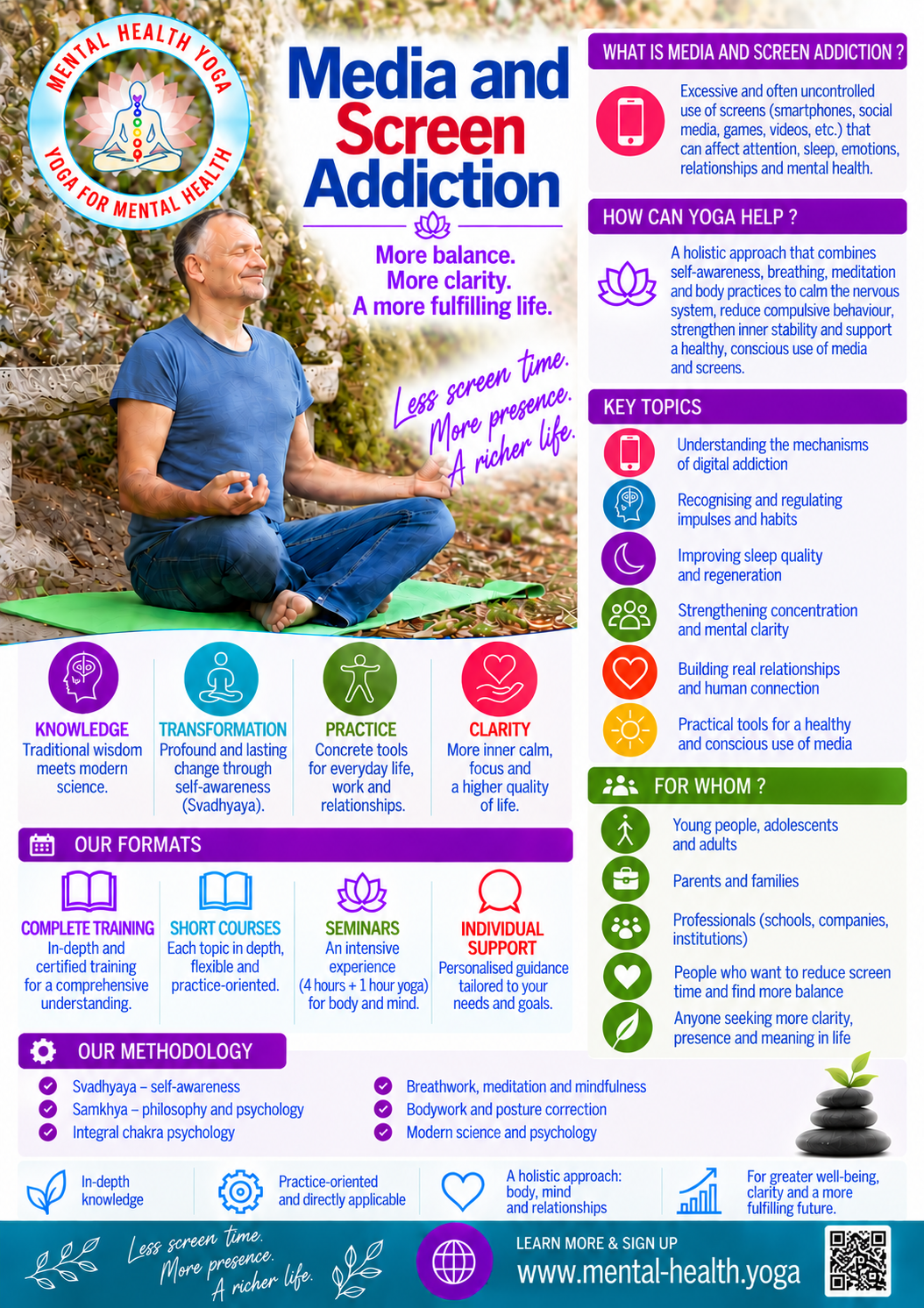
Flyer: Media and Screen Addiction
This flyer provides an overview of media and screen addiction, possible supportive approaches through yoga, and the services offered by Mental Health Yoga. Click the preview to open the PDF file.